
News Categories
Release Liner Selection for Double-Sided Tape in Production
How to Evaluate an Industrial Adhesive Tape Sample
Die-Cut Adhesive Tape: Design the Part and the Process Together
Aluminum Foil Tape for HVAC: What to Check Before Ordering
How to Choose Foam Tape for a Bond Between Uneven Surfaces
A Better Adhesive Tape Bond Starts Before the Tape Is Applied
Comparing Industrial Tape Quotations
Planning a Tape Sample Evaluation
Preparing an Industrial Tape Enquiry
News / Product News
A Better Adhesive Tape Bond Starts Before the Tape Is Applied
Adhesive tape surface preparation often starts before the tape touches the part. Oil, dust, moisture, release agents, and inconsistent handling can all change the contact between a pressure-sensitive adhesive and its substrate. A repeatable surface-preparation and application routine gives engineering and production teams a better starting point for evaluating industrial tape.
Adhesive tape surface preparation: start with the real substrate
Identify the exact material and finish on both bonding surfaces: for example, painted metal, powder-coated steel, glass, ABS, or a low-surface-energy plastic. “Metal” or “plastic” is not specific enough for a meaningful trial. Coatings, texture, additives, and process residues can affect results.
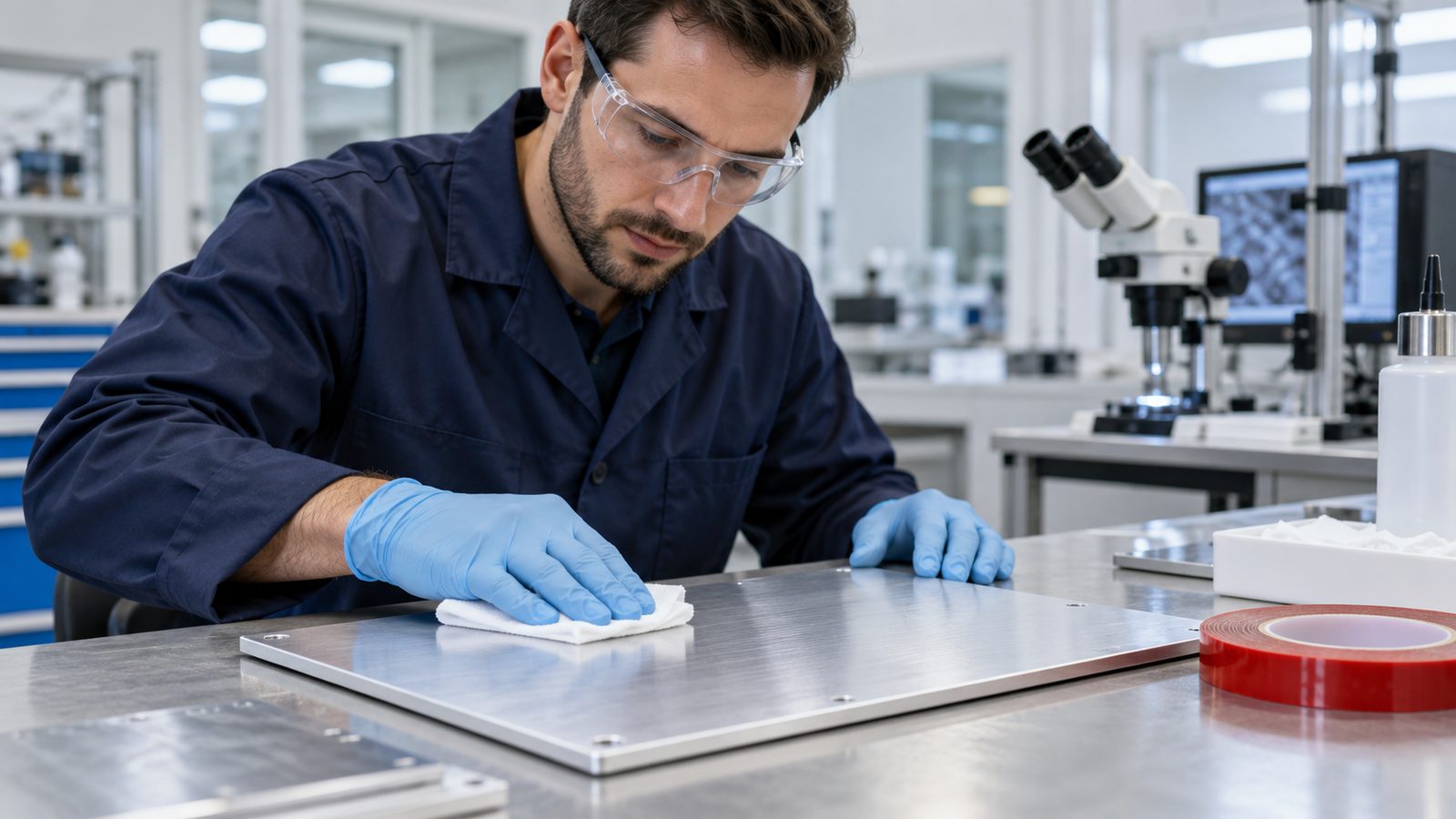
Keep adhesive tape surface preparation clean and dry
Remove visible dust and contamination using a method compatible with the substrate and workplace requirements. The appropriate cleaner depends on the material and residue; confirm compatibility before use and allow the surface to dry fully. 3M’s VHB application guidance likewise treats cleaning as a core step and notes that some surfaces may require additional preparation. Do not assume one cleaning recipe is suitable for every substrate.
Control contact and pressure
Handle prepared parts with clean gloves where practical. Apply tape without stretching it, then press or roll it firmly so the adhesive can make close contact with the surface. Record the tape, substrate, cleaning method, application pressure, temperature, and time between application and testing. Follow the tape supplier’s technical data and safety instructions for the selected product.
Test the assembled part, not just a coupon
A quick peel check can reveal obvious process variation, but the finished assembly may see shear, edge lift, vibration, heat, humidity, or fluid exposure. Build a trial that reflects the actual part geometry and operating environment. Compare samples after the relevant dwell and conditioning periods.
A useful production checklist
Before release, confirm the substrate and finish, cleaning method, dry time, tape lot and liner, application pressure, operator instructions, and acceptance criteria. If results vary, change one process variable at a time and document the result.
Surface preparation does not replace correct tape selection. It helps teams evaluate a candidate tape under controlled conditions and makes process issues easier to find. For a recommendation, share the substrates, bond area, service conditions, and converting format with your tape supplier.
Technical references: 3M VHB application guidance. Manufacturer guidance applies to the stated products and conditions.