
News Categories
Release Liner Selection for Double-Sided Tape in Production
How to Evaluate an Industrial Adhesive Tape Sample
Die-Cut Adhesive Tape: Design the Part and the Process Together
Aluminum Foil Tape for HVAC: What to Check Before Ordering
How to Choose Foam Tape for a Bond Between Uneven Surfaces
A Better Adhesive Tape Bond Starts Before the Tape Is Applied
Comparing Industrial Tape Quotations
Planning a Tape Sample Evaluation
Preparing an Industrial Tape Enquiry
News / Product Guide
Planning a Tape Sample Evaluation
Define your application and acceptance criteria before comparing samples.
Decide what the sample must prove
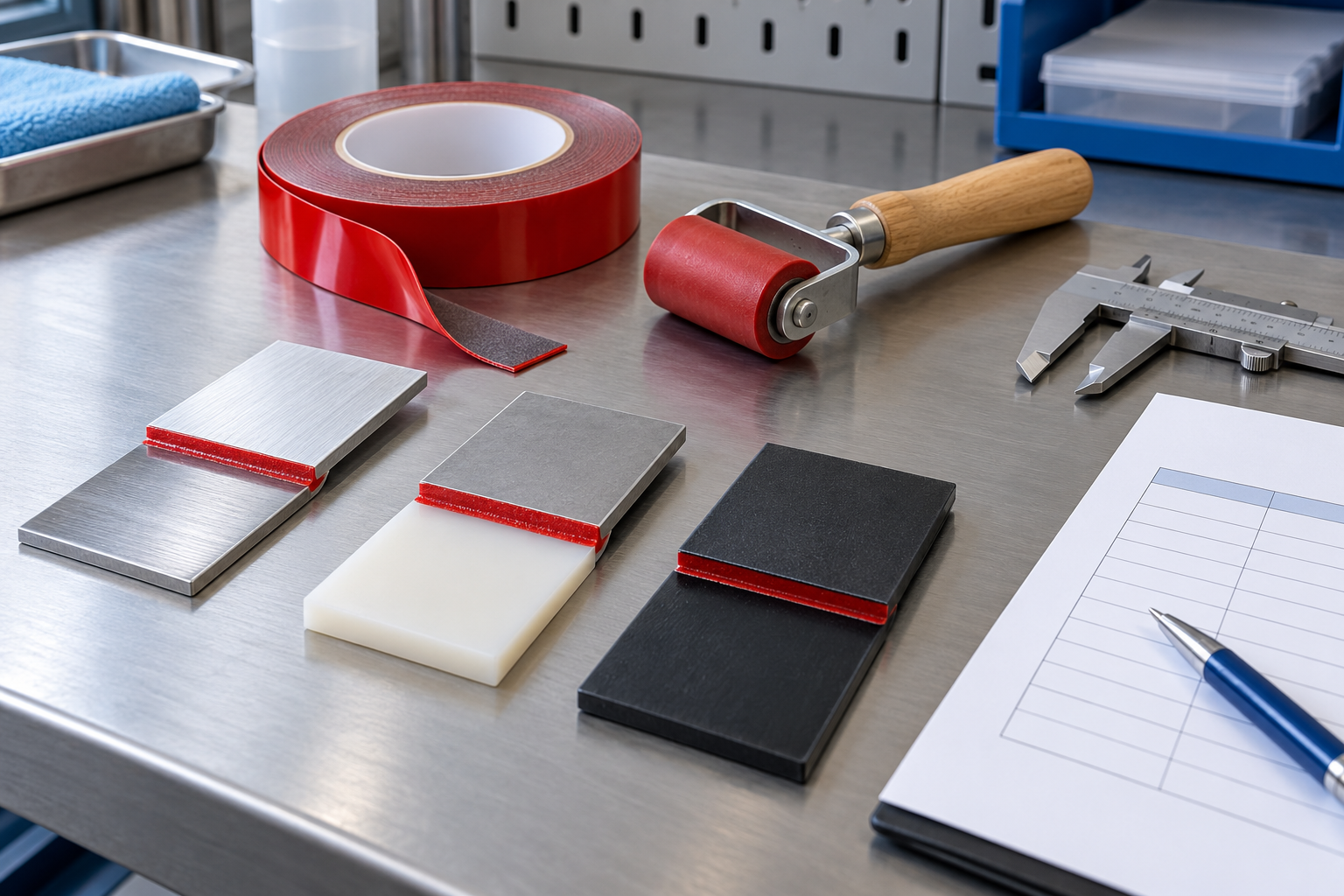
A tape sample evaluation should answer a production question. Will the joint remain aligned? Can an operator remove the liner without stretching the part? Does the adhesive suit the specified finish? Write down the requirement before opening the sample pack.
Use actual production substrates where possible. Record the material grade, coating, surface texture and supplier. A smooth laboratory panel may not represent a textured housing or a powder-coated frame.
Keep the application process consistent
3M’s VHB application guidance treats cleaning, tape application and final pressure as separate steps. Its surface-preparation guidance also identifies exceptions for oily, porous and other difficult surfaces. Follow the instructions for the selected tape and substrate rather than applying one cleaning method to every material.
Before using a cleaner, check material compatibility and its safety instructions. Let the prepared surface dry. Record the application tool and method so another operator can repeat the trial. Avoid touching a prepared bonding area.
Use a short, traceable trial record
- Sample identity: exact tape reference, lot information if supplied, thickness, format and receipt date.
- Substrates: grade, coating, finish and any change from normal production.
- Preparation: cleaner, treatment and drying procedure.
- Assembly: bond area, alignment, application pressure or tool setting, and temperature.
- Timing: dwell time before handling, loading and inspection.
- Outcome: the agreed measurement, visible defects, photographs and the failure location if a bond separates.
Check the joint under relevant conditions
Choose checks that match the job: sustained loading for a hanging part, edge lift for a trim piece, or liner removal for a small die-cut component. Define the load, duration and acceptance criteria with the responsible engineer. Do not substitute a quick hand pull for a specified test method.
For VHB tapes, 3M describes bond build over time. Compare specimens at the same recorded dwell time. This does not set a universal cure or approval time for other adhesive families.
Turn the result into a purchasing decision
Approve the sample against the agreed criteria, or record what must change before another trial. Keep the accepted material and assembly method together. A different coating, cleaner, tape construction or part geometry may justify a new evaluation.
See foam tape and double-sided tape options, then send JSRH your substrate details and trial requirements. Sample evaluation supports selection; it does not certify an untested application.
Technical references: 3M: Applying VHB Tapes · 3M: Surface Preparation for VHB Tape Applications. Manufacturer guidance applies to the stated products and conditions.